Korean Bibimbap
Uitgelicht onder: Wereldse Inspiratie
Korean Bibimbap is a vibrant and nutritious rice bowl topped with a variety of vegetables, a fried egg, and a spicy gochujang sauce.
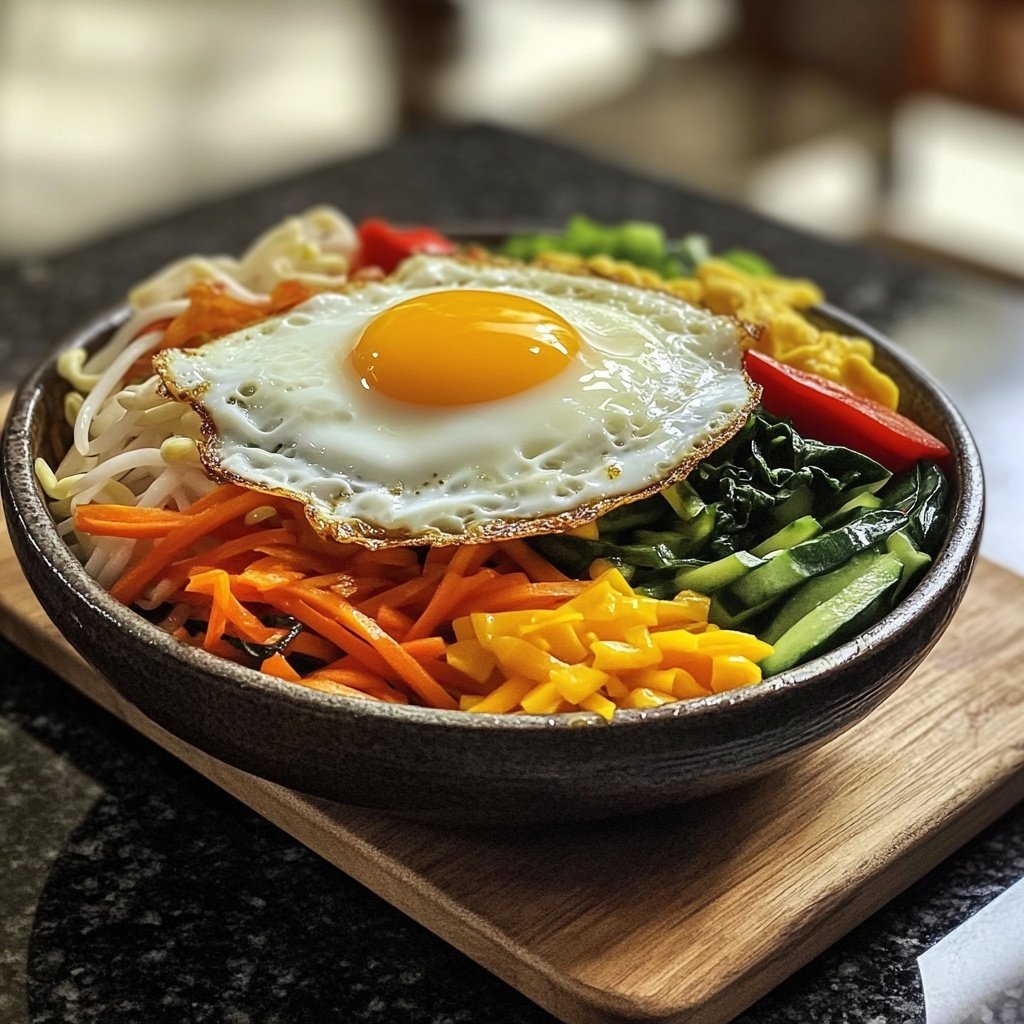
Korean Bibimbap is not just a meal; it's an experience! This colorful dish represents harmony through its variety of ingredients and flavors, making it a favorite among many.
Why You'll Love This Recipe
- A beautiful medley of colorful vegetables
- Customizable with your choice of toppings
- Packed with nutrients and flavor
The Essence of Bibimbap
Bibimbap, which translates to 'mixed rice,' is a beloved dish in Korean cuisine known for its beautiful presentation and delicious flavors. The dish is traditionally served in a hot bowl, allowing the rice to crisp slightly at the bottom while maintaining a warm and inviting temperature. This unique serving style enhances the overall dining experience, making each bite a delightful mix of textures.
What sets bibimbap apart is its versatility. You can use any variety of vegetables, proteins, or even tofu based on your preferences or what you have available in your kitchen. This adaptability not only makes it an excellent choice for meal prep but also allows everyone to personalize their bowl, ensuring that each serving is unique and satisfying.
Nutritional Benefits
Korean Bibimbap is not only a feast for the eyes but also a powerhouse of nutrition. The combination of vegetables—such as spinach, carrots, and zucchini—provides essential vitamins and minerals that promote overall health. Spinach is rich in iron, while carrots offer a good dose of beta-carotene, supporting eye health and immune function.
Moreover, the dish is a great source of carbohydrates from the rice, providing the energy needed for a busy day. When paired with the protein from the eggs, bibimbap becomes a well-rounded meal that can satisfy hunger while fueling your body with wholesome ingredients. The addition of gochujang sauce adds a unique spicy kick, enhancing both flavor and metabolism.
Perfecting Your Bibimbap
To achieve the best flavor in your bibimbap, focus on the quality of your ingredients. Fresh, seasonal vegetables will not only taste better but also add vibrant colors to your dish. If you can, source organic produce to maximize the health benefits. Additionally, consider experimenting with different proteins, such as grilled chicken or marinated beef, to elevate your bibimbap further.
Finally, remember that presentation matters. Take the time to arrange your vegetables and egg artfully over the rice. This attention to detail not only enhances the visual appeal but also makes the meal more enjoyable. A well-presented bibimbap is sure to impress your family and friends, transforming a simple meal into a special occasion.
Ingrediënten
Ingredients
For the Bibimbap
- 2 cups cooked rice
- 1 cup spinach
- 1 carrot, julienned
- 1 zucchini, julienned
- 1 cup bean sprouts
- 2 eggs
- 2 tablespoons sesame oil
- Salt to taste
For the Gochujang Sauce
- 2 tablespoons gochujang
- 1 tablespoon sesame oil
- 1 tablespoon sugar
- 1 tablespoon vinegar
- 1 teaspoon minced garlic
Mix and match your favorite vegetables to make this dish your own!
Bereidingswijze
Instructions
Prepare the Vegetables
In a pan, heat sesame oil over medium heat. Sauté spinach, carrots, zucchini, and bean sprouts separately until softened. Season with salt.
Cook the Eggs
In the same pan, fry the eggs sunny side up until the whites are set but the yolks remain runny.
Make the Gochujang Sauce
In a small bowl, mix gochujang, sesame oil, sugar, vinegar, and minced garlic until well combined.
Assemble the Bibimbap
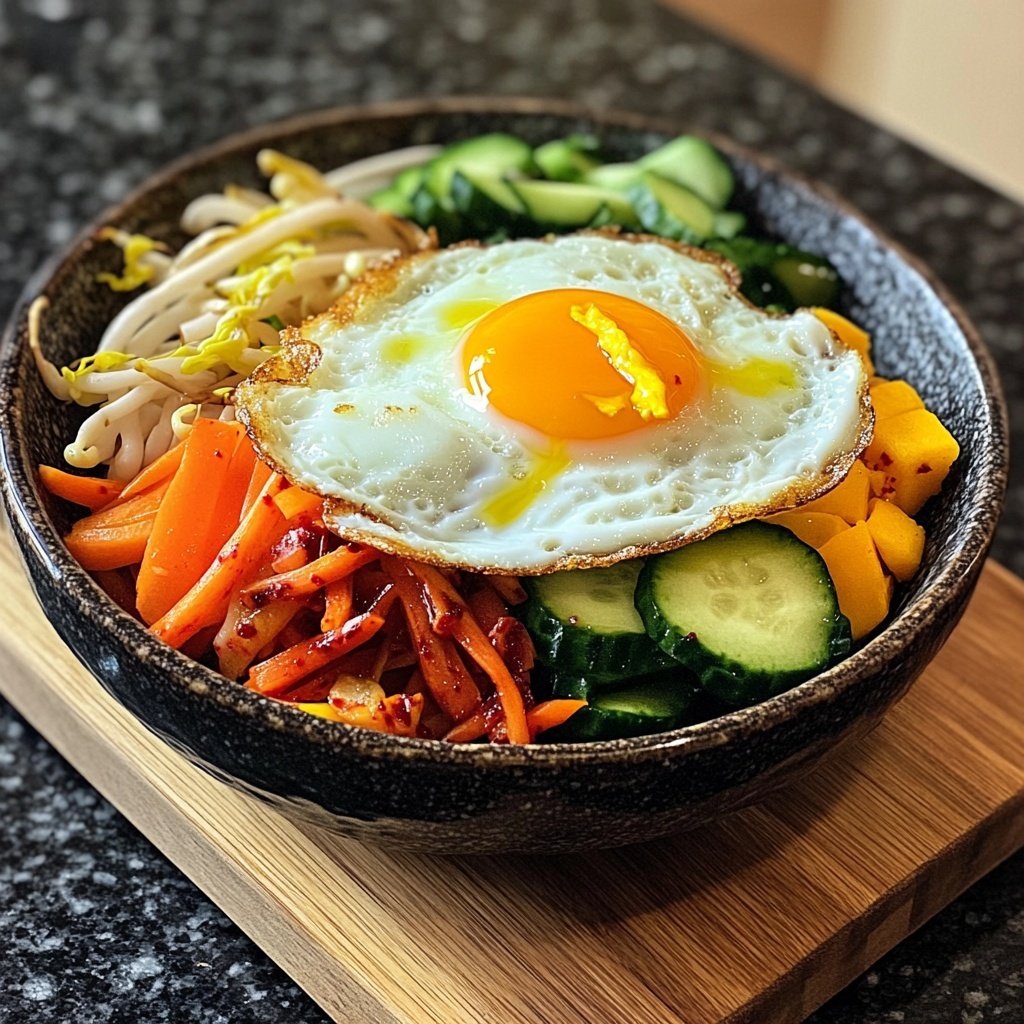
In two bowls, divide the cooked rice. Arrange the sautéed vegetables on top and place the fried egg in the center. Drizzle with gochujang sauce.
Mix everything together before eating to enjoy all the flavors!
Professionele Tips
- Feel free to add protein like beef or tofu for a heartier meal.
Tips for Cooking Perfect Rice
The key to a perfect bibimbap starts with the rice. Ideally, you should use short-grain rice, which is stickier than long-grain varieties, allowing the rice to hold together better when mixed with toppings. Rinse the rice thoroughly before cooking to remove excess starch, which can make the rice gummy. Cooking it in a rice cooker or using the stovetop method with the right water-to-rice ratio will yield fluffy, tender grains.
For added flavor, consider cooking your rice in vegetable or chicken broth instead of water. This subtle enhancement will elevate the overall taste of your bibimbap, making it even more delicious. Once cooked, let the rice rest for a few minutes before serving to allow it to firm up slightly.
Storing and Reheating Leftovers
Bibimbap can be a great make-ahead meal! If you have leftovers, store the components separately in airtight containers in the refrigerator. This will help maintain the freshness and texture of each ingredient. The rice can be kept for about 3-4 days, while the sautéed vegetables and sauce should ideally be consumed within a few days to ensure quality.
When you're ready to enjoy your leftovers, reheat the rice gently in the microwave or on the stovetop with a splash of water to prevent it from drying out. The vegetables can be warmed up quickly in a pan. Once everything is heated through, assemble your bibimbap as you did initially, and enjoy a quick and tasty meal!
Serving Suggestions
Bibimbap is incredibly versatile and can be enjoyed as a main dish or a side. Pair it with a light soup, such as miso or kimchi stew, for a complete Korean meal. You can also serve it alongside Korean fried chicken for a delightful combination of flavors and textures.
For those looking to enhance their bibimbap experience, consider garnishing with sesame seeds or sliced scallions. These additions will not only boost the flavor but also add visual appeal. Whether you're hosting a dinner party or enjoying a cozy meal at home, bibimbap is sure to impress and satisfy.
Vragen Over Recepten
→ Can I make Bibimbap vegetarian?
Absolutely! Just omit any meat and add more vegetables.
→ What can I substitute for gochujang?
You can use sriracha or any spicy chili paste if gochujang is not available.
→ Is Bibimbap gluten-free?
Yes, as long as you use gluten-free soy sauce in the gochujang sauce.
→ Can I prepare the ingredients in advance?
Yes, you can prep the vegetables and sauce ahead of time to make assembly quicker.
Korean Bibimbap
Gemaakt door: Grace Walker
Recepttype: Wereldse Inspiratie
Vaardigheidsniveau: Easy
Eindportie: 2 servings
Wat je Nodig Hebt
For the Bibimbap
- 2 cups cooked rice
- 1 cup spinach
- 1 carrot, julienned
- 1 zucchini, julienned
- 1 cup bean sprouts
- 2 eggs
- 2 tablespoons sesame oil
- Salt to taste
For the Gochujang Sauce
- 2 tablespoons gochujang
- 1 tablespoon sesame oil
- 1 tablespoon sugar
- 1 tablespoon vinegar
- 1 teaspoon minced garlic
Stappen
In a pan, heat sesame oil over medium heat. Sauté spinach, carrots, zucchini, and bean sprouts separately until softened. Season with salt.
In the same pan, fry the eggs sunny side up until the whites are set but the yolks remain runny.
In a small bowl, mix gochujang, sesame oil, sugar, vinegar, and minced garlic until well combined.
In two bowls, divide the cooked rice. Arrange the sautéed vegetables on top and place the fried egg in the center. Drizzle with gochujang sauce.
Extra Tips
- Feel free to add protein like beef or tofu for a heartier meal.
Voedingswaarde (Per Portie)
- Calories: 540 kcal
- Total Fat: 22g
- Saturated Fat: 4g
- Cholesterol: 180mg
- Sodium: 500mg
- Total Carbohydrates: 75g
- Dietary Fiber: 6g
- Sugars: 5g
- Protein: 15g